One offer. Two essential parts.
A potential guest contacts your hotel or retreat directly. You prepare an attractive personal offer. Perhaps you include a special price or complimentary treatment. But what about the booking conditions? Those already appear on your website. So why send them again? Because your public booking conditions may undermine your attractive private offer.
Your website conditions may work against you
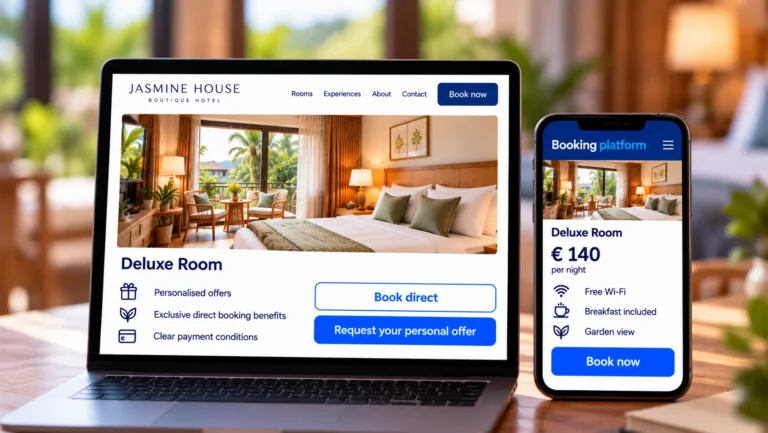
Your website displays your public booking conditions. In your market, these conditions must align with your booking platforms. They may require advance payment or impose strict cancellation rules. Now imagine sending a guest an attractive private offer. The price looks good. You even include a free airport transfer. However, your guest checks your website before making a decision. There, they find your standard payment and cancellation conditions. Do those conditions also apply to the private offer? The answer remains unclear. As a result, your attractive offer suddenly creates uncertainty.
Your personal offer needs two parts
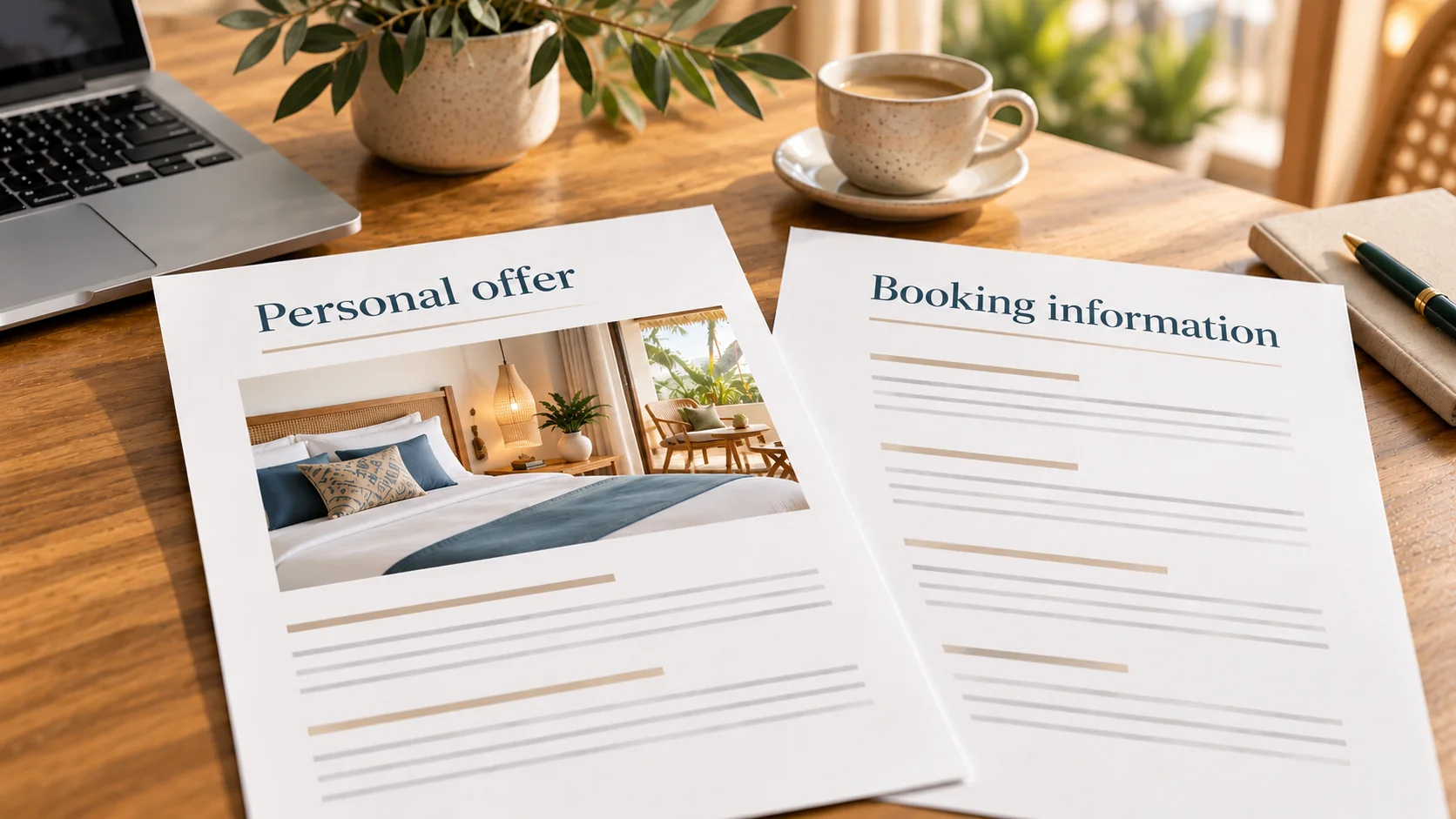
A complete private offer needs two essential parts.
Part 1: Your personal offer
Present the price, accommodation or programme, and special benefits. Then tailor these details to your guest’s needs and length of stay.
Part 2: Your booking information
Explain your payment, cancellation, refund and arrival conditions. These may differ from your public booking conditions. They may also vary by stay length. TheTrustKit creates one ready-to-use booking information page using your Business Questionnaire answers. This page also explains how guests confirm their booking. Include the same page with every personal offer. Only Part 1 needs personalisation.
Why your existing booking information is not enough
You might think your website already provides everything a guest needs. After all, your booking conditions are clearly published. However, those conditions describe your public booking arrangements. A private offer may follow different rules. Without separate booking information, guests cannot know which conditions apply. They may assume your public conditions still apply. Consequently, even an attractive private offer can lose its advantage. A lower price cannot resolve uncertainty about payment, cancellation or refunds. Instead, clear private booking information answers these questions directly.
Make your private conditions clear
Think about guests travelling thousands of kilometres to reach your hotel or retreat. They want to know what happens before and after arrival. Can they pay when they arrive? What happens if their travel plans change? And what if their accommodation or programme differs from the offer? Your booking information should answer these questions. Keep explanations short and avoid complicated language. Most importantly, explain any conditions that differ from your website. Then send this information together with every personal offer. That way, guests never need to search for the answers.
One offer. Two essential parts.
Your public booking conditions support your standard booking arrangements. By contrast, private booking information explains the conditions of your personal offer. Both serve different purposes. A special price or extra benefit may attract a guest. Yet unclear booking conditions can quickly undermine that advantage.
Never send a personal offer without its own clear booking information.
Give guests the complete picture before they decide. One personal offer. Two essential parts. One clear booking decision.
Manufactured in-house by TheTrustKit